
Oh my, look at the time
Mathematics, astronomy, religion and one beautiful clock

I have a clock on my nightstand that not only tells the time but has a radio and a CD player built in. I know, right, pretty handy! But, alas, it cannot show the relative positions of the sun and moon.
For that, you need an astronomical clock.
If you want to see one that is an absolute work of art, your best bet is to go to the Old Town area in the city of Prague in the Czech Republic. There you’ll find the Pražský orloj – better known as the Prague Astronomical Clock – on the southern side of the Old Town Hall Tower.

Back in 1364, the tower was added to a house at that location. A few decades later in 1410 Mikuláš of Kadaň created the clock with the help of Jan Šindel, a professor of mathematics and astronomy at Charles University. About 80 years later, in 1490, Jan Růže added the calendar plate. In the 1600s, a Death figure was added.
That’s right – my alarm clock has a snooze button, but the medieval Prague Astronomical Clock features a kind of Grim Reaper that hourly rings a memento mori bell to help us to remember death.
It’s a skeletal figure that strikes the hour at the beginning of a parade of wooden figures added in 1865 that include 12 Apostles sculptures and three others that represent vanity, greed and lust. The moving figures appear in windows at top every time the clock strikes the hour. This is after all a timepiece built during the medieval era.
And yet, it is considered an astronomical clock. Back in its day, the Orloj was an achievement in scientific information sharing, offering a detailed model of the universe in the form of an astrolabe.
It’s essentially a planetarium centered on Prague, detailing the journey of the sun through the zodiacal constellations, the phases of the moon, the equinoxes, the seasons and days.

Remember, we’re talking the 15th century, and Nicolaus Copernicus doesn’t upend astronomical thinking with his sun-centered (heliocentric) solar system ideas until 1543. Even then, the revolutionary concepts in his six-volume work called On the Revolutions of the Heavenly Spheres don’t get much traction for a while.
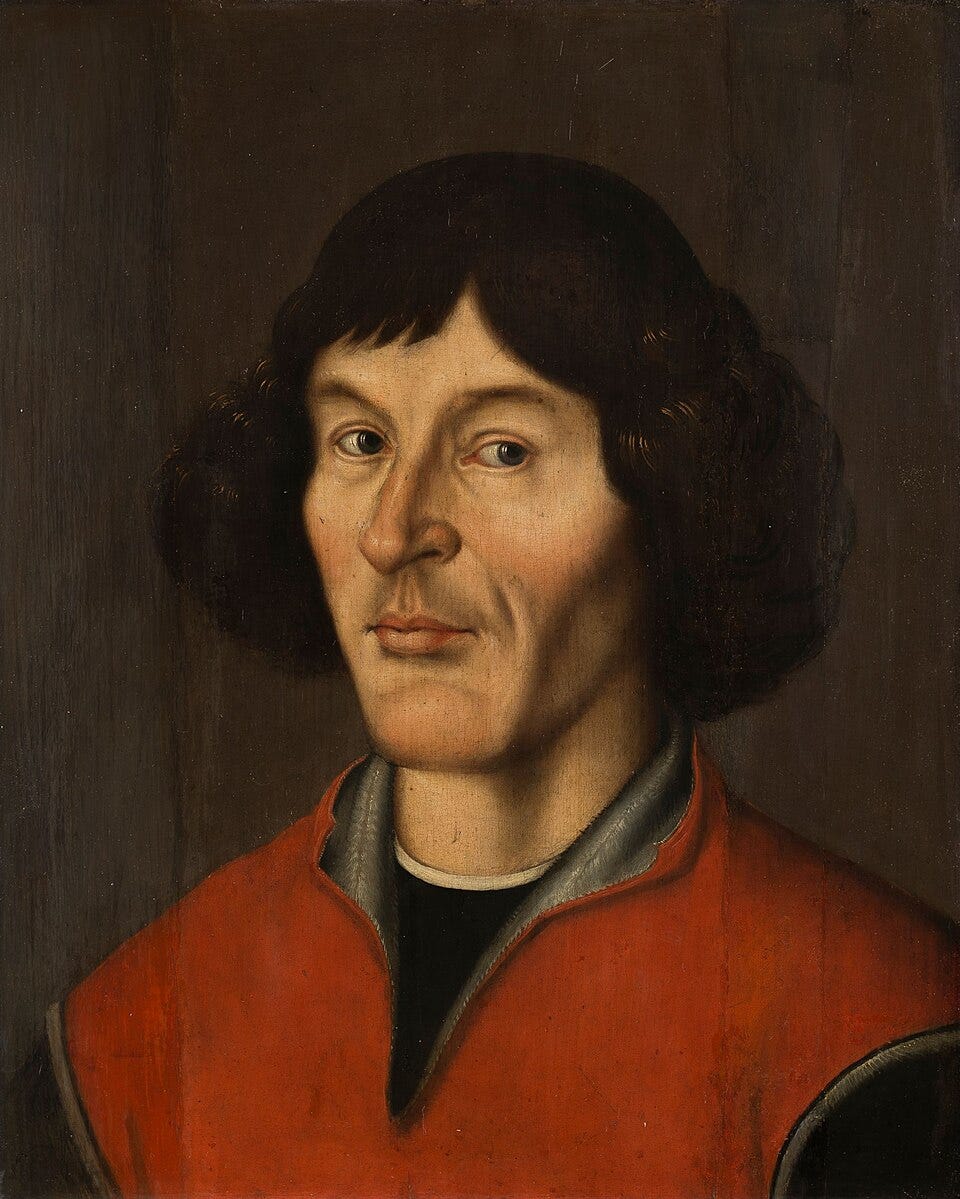
So I won’t tout too heavily the scientific credentials of an astronomy-connected timepiece built before people understood the Earth wasn’t the center of the universe. Especially one that focuses heavily on religious themes with its hourly cavalcade of apostles and its stationary figures of sinners.
The Prague Astronomical Clock wasn’t designed and built all at once with all its intricacies and layers of meanings. It has a rich history of additions, renovations and retoolings.
But if I get to Prague someday, I’ll plan to stop by the Old Town area and visit the Orloj. We may have clocks now that tell us the time easier and apps that relate more reliable astronomical data, but they won’t ever be as artistically beautiful as the Prague Astronomical Clock.
My old alarm clock sure as heck isn’t!
If you want more detail about the mathematics and history of the Orloj, I am part-way through a whole series on it: stefankamola.substack.com