
More than macabre
Edgar Allan Poe, the poetic imagination, and art vs. science

Macabre. It’s an odd word really – both in pronunciation and definition since it deals with personifying death or focusing on things that are gruesome or horrific.
And what writer is known as a master of the macabre? If you said Edgar Allan Poe, I’ll pour you a glass of amontillado.
After all, Poe did write horrific stories such as “The Pit and the Pendulum,” “The Tell-Tale Heart” and “The Masque of the Red Death” as well as some poems in which death plays a big part – “Annabel Lee,” “Lenore” and, hard not to include, “The Raven.”
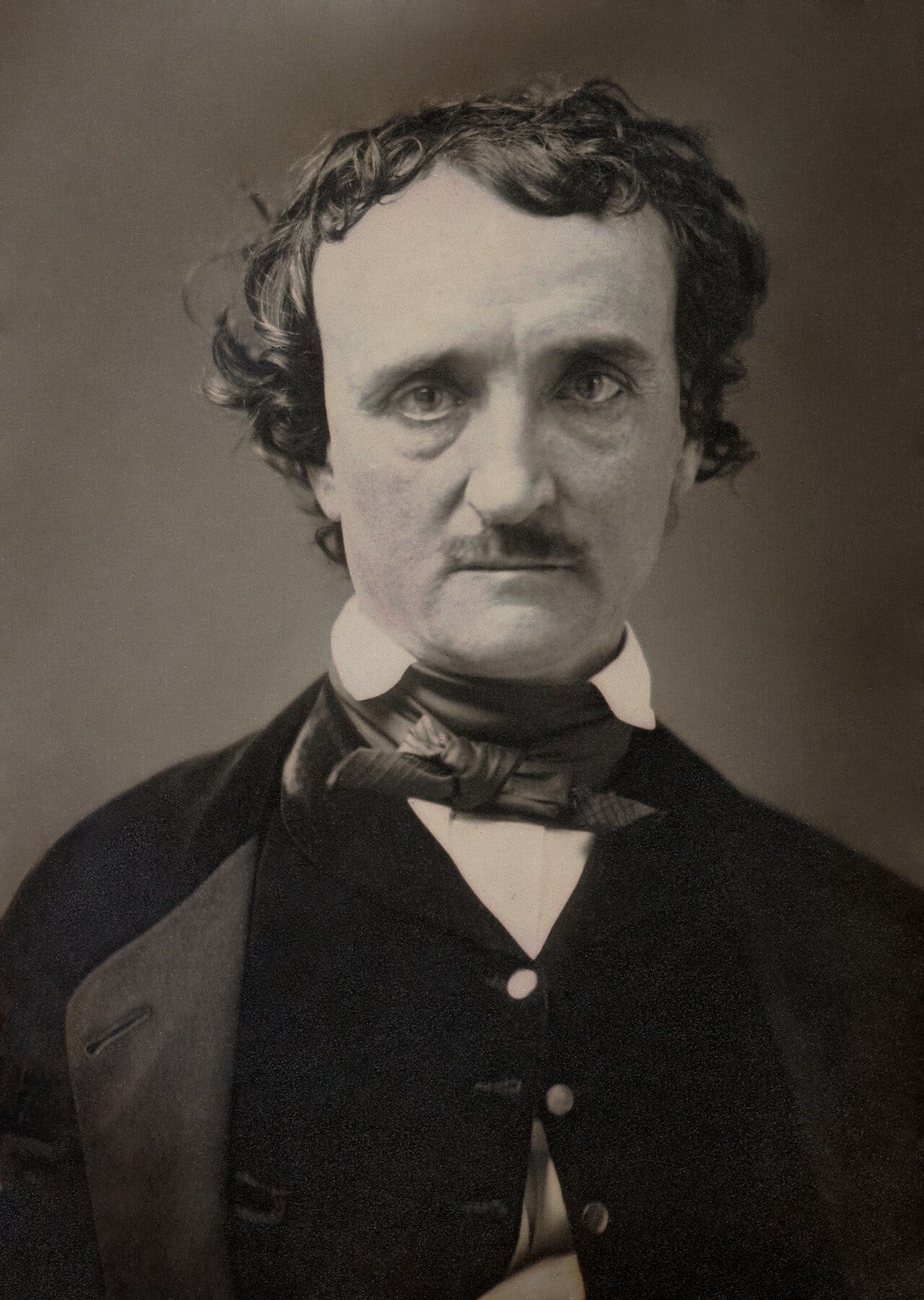
But Poe wasn’t only about death, despair and gothic horror. He is also known as the father of the modern detective story. It was back in 1841 when Poe’s amateur crime solver, C. Auguste Dupin, features in “The Murders in the Rue Morgue,” the first of three short stories in which the gentleman of leisure solves crimes though logic and his “ratiocination” method.
But Poe, despite these stories of logic, analysis and deductive reasoning, was at heart a gothic writer. Most of his stories and poems are suffused with mysticism, mythology and, yes, the macabre.
The early 1900s was a time of enormous technological change with major advances in medicine, transportation, agriculture, business and other endeavors. Life-changing inventions were popping up one after another, such as the battery in 1800, the stethoscope in 1816, the mechanical calculator in 1822, the telegraph in 1834 and many others.
Science was then, as it still is, the driver of these technological achievements. But as science brought us rapid advancement in many areas, it also led to the loss of other things, such as myth, fantasy, imagination and nature’s mystery.
At least that’s what Poe describes in his poem “Sonnet—To Science.”
The 14-line poem first appeared untitled in a limited-run collection of Poe’s poetry called Tamerlane in 1829. Its structure follows the traditional English sonnet form – the one William Shakespeare was so fond of. The sonnet’s 14 lines are divided into three quatrains, wrapping up with a rhyming couplet.
At this interesting intersection of art and science, Poe is full voiced for art. He starts out the poem by directly addressing Science, calling it “true daughter of Old Time,” then goes on to lament how science with its “dull realities” wipes out creative imagination, magic, mysteries and myths.
Poe was born in 1809. So he was just 20 when he wrote this sonnet, describing the damage he thought science does to the poetic imagination. He would, of course, go on to write many more poems despite the numerous wonderous technological changes that reshaped the world during his brief lifetime. He died in 1849.
People still love Poe’s stories and poems today. Even The Simpsons included an odd version of “The Raven” in one of its many, many, many episodes. View it on YouTube.
But let’s not forget Poe’s “Sonnet—To Science.” It’s certainly worth reading in full:
Science! true daughter of Old Time thou art!
Who alterest all things with thy peering eyes.
Why preyest thou thus upon the poet’s heart,
Vulture, whose wings are dull realities?
How should he love thee? or how deem thee wise,
Who wouldst not leave him in his wandering
To seek for treasure in the jewelled skies,
Albeit he soared with an undaunted wing?
Hast thou not dragged Diana from her car,
And driven the Hamadryad from the wood
To seek a shelter in some happier star?
Hast thou not torn the Naiad from her flood,
The Elfin from the green grass, and from me
The summer dream beneath the tamarind tree?
In Poe’s lament for the mystery and grandeur of the ancient myths, you can hear an echo of a similar cry from a poet born about 40 years before Poe. William Wordsworth was born in 1770, during the time the first Industrial Revolution was picking up steam, transforming England from an agrarian to an industrial economy.
Wordsworth was born in Cumberland, England and would die in 1850, shortly after Poe. But it was in 1807, that he published “The World Is Too Much With Us,” in Poems, in Two Volumes.
As part of the English Romantic movement, Wordsworth’s sonnet criticizes the materialism of his burgeoning industrial era and how people have become disconnected from nature. As Poe does later, he harkens back to a time of ancient mythology.
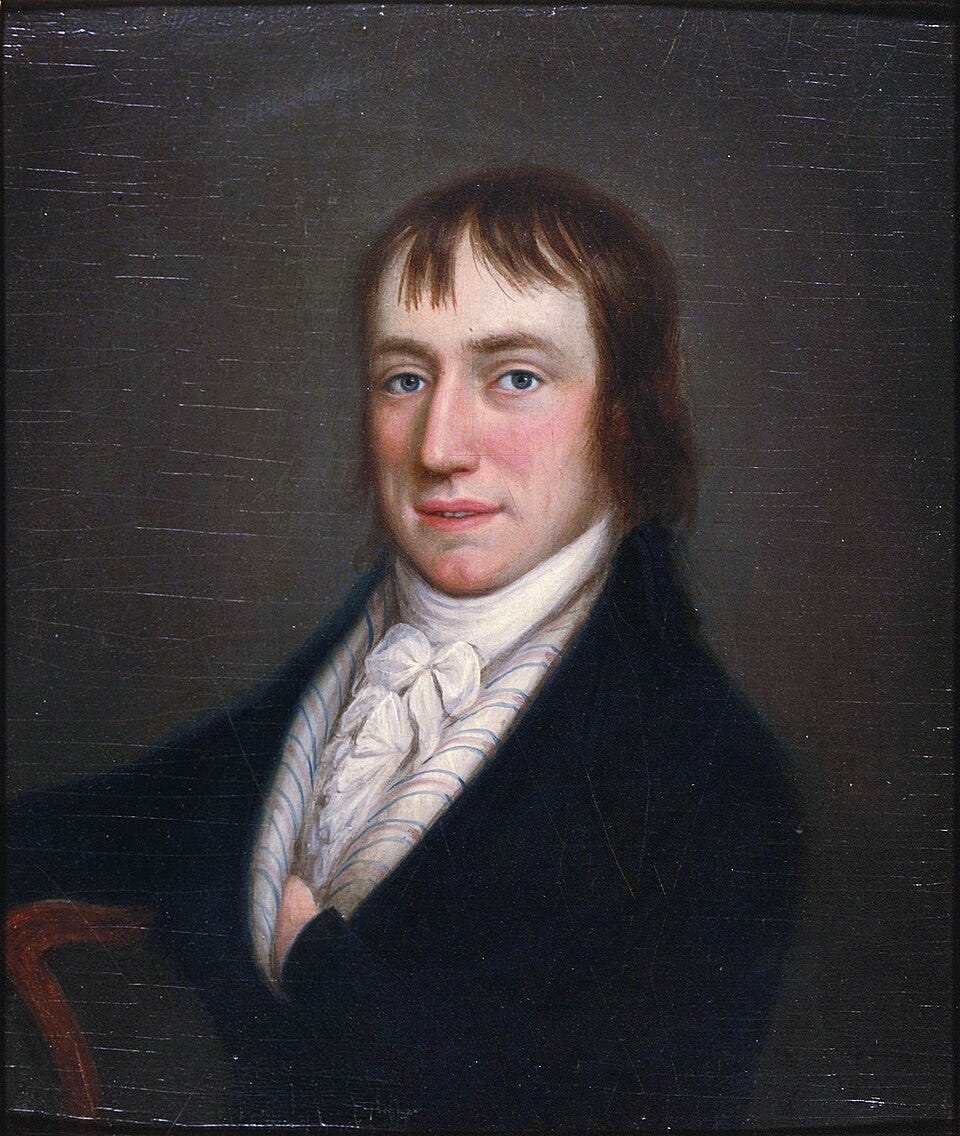
“The World Is Too Much With Us” calls out for a simpler time:
The world is too much with us; late and soon,
Getting and spending, we lay waste our powers;
Little we see in Nature that is ours;
We have given our hearts away, a sordid boon!
This Sea that bares her bosom to the moon;
The winds that will be howling at all hours,
And are up-gathered now like sleeping flowers,
For this, for everything, we are out of tune;
It moves us not.—Great God! I’d rather be
A pagan suckled in a creed outworn;
So might I, standing on this pleasant lea,
Have glimpses that would make me less forlorn;
Have sight of Proteus rising from the sea;
Or hear old Triton blow his wreathèd horn.
Poe and Wordsworth are not alone in their poetic angst over science, technology, industrial growth and the loss of connection with the natural world. Walt Whitman also had his say for preferring a closer commune with nature, just without a yearning for mythology.
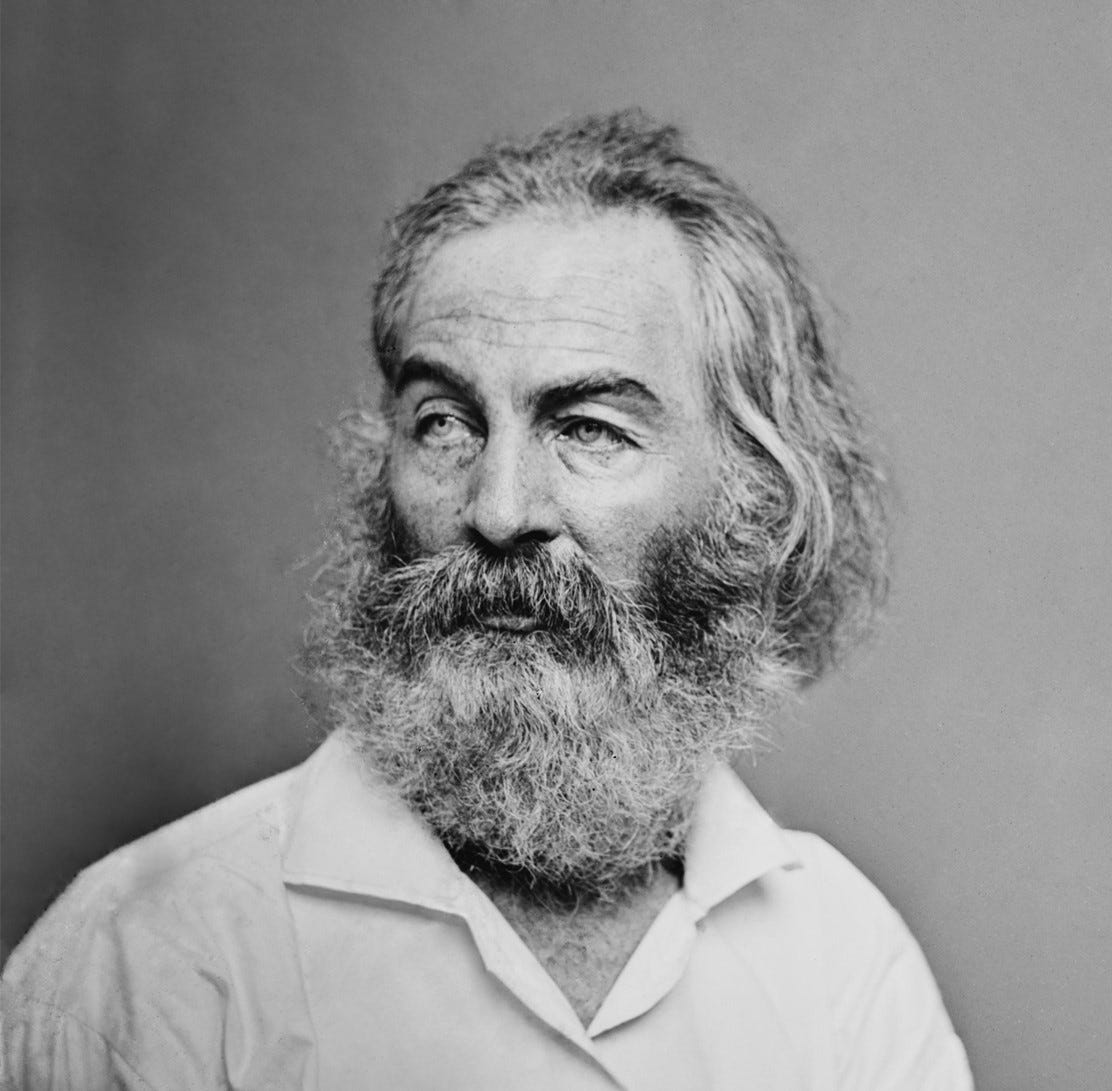
In “When I Heard the Learn’d Astronomer,” an unnamed narrator attends a lecture by the “learn’d astronomer” and views all the proofs, figures, charts and diagrams and hears the applause of the audience. The poem’s narrator can’t take all the dry, scientific explanations of the heavens and instead goes out alone to immerse himself directly in the beauty of nature, seeing the stars first-hand:
When I heard the learn’d astronomer,
When the proofs, the figures, were ranged in columns before me,
When I was shown the charts and diagrams, to add, divide, and measure them,
When I sitting heard the astronomer where he lectured with much applause in the lecture-room,
How soon unaccountable I became tired and sick,
Till rising and gliding out I wander’d off by myself,
In the mystical moist night-air, and from time to time,
Look’d up in perfect silence at the stars.
Whitman wrote this poem in the midst of the Civil War, and it first appeared in his collection called Drum-Taps. Fast forward a century and we encounter another lament about science at odds with the creative imagination – only this time written by a scientist.
Enter one Carl Edward Sagan, astronomer, planetary scientist and science popularizer with the heart of a poet. In his wonderful book Cosmos, he writes about his early impressions of Mars, made long before we sent spacecraft there to study the red planet:
I can remember as a child reading with breathless fascination the Mars novels of Edgar Rice Burroughs. I journeyed with John Carter, gentleman adventurer from Virginia, to “Barsoom,” as Mars was known to its inhabitants. I followed herds of eight-legged beasts of burden, the thoats. I won the hand of the lovely Dejah Thoris, Princess of Helium. I befriended a four-meter-high green fighting man named Tars Tarkas. I wandered within the spired cities and domed pumping stations of Barsoom, and along the verdant banks of the Nilosyrtis and Nepenthes canals.
But, alas, all of Barsoom – its spired cities, princesses, green fighting men and verdant canals – are but a modern myth. In 1976 NASA’s two Viking spacecraft would land on Mars, and the whole insubstantial pageant dissolved and faded, leaving not a rack behind.
As Sagan notes in Cosmos: “The Mars revealed by the Viking mission is of enormous interest – particularly when we remember that the landing sites were chosen for their dullness. But the cameras revealed no sign of canal builders, no Barsoomian aircars, or short swords, no princesses or fighting men, no thoats, no footprints, not even a cactus or a kangaroo rat. For as far as we could see, there was not a sign of life.”
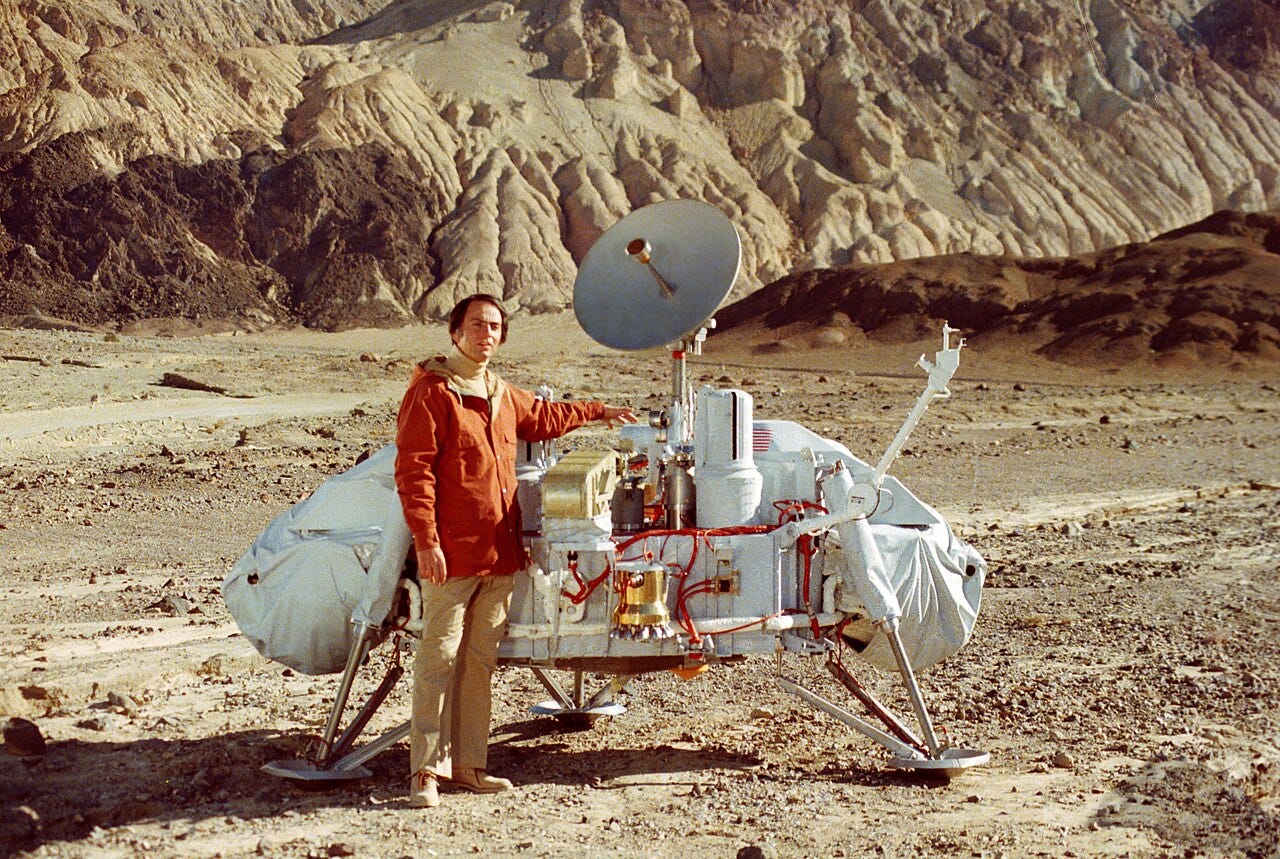
Sagan would know something about the Viking landing sites at Chryse Planitia and Utopia Planitia. He was a Cornell University professor, director of the university’s Laboratory for Planetary Studies and visiting scientist at NASA’s Jet Propulsion Laboratory. Working with JPL, he helped select the bland, but safe, Viking landing sites.
We live now in a time of ever-accelerating scientific and technological advances. Space-based telescopes, like Hubble and Webb, have expanded our views of the cosmos far beyond Mars, opening our scientific inquiries to limits that strain human comprehension.
So many myths and legends have fallen away in that rush for greater insights into nature.
Surely, that loss is something to lament. Can we not be left a little of our summer dream beneath the tamarind tree?
It's interesting how people now seem to be seeking similar sentiments and pleasures to the Romantics, looking for the awe of nature amid growing technological booms, as an antidote to it. In this age of AI acceleration, there's an increase in the offline 'analogue' and tactile crafts, a life outdoors with less screen time.
Though it is also worth noting that Poe also wrote a poem (or prose?) about the universe, where he came up with Olbers' Paradox long before Olbers hypothesised why the night sky is dark.